The Riviera Maya has no shortage of beautiful restaurants. Finding one that feels genuinely connected to Mexico, rather than designed for people on holiday from somewhere else, is a different proposition.
That is what brought us to Punta Corcho in Puerto Morelos.
For a date night away from Cancún, we wanted something special. Good food, thoughtful cocktails, and a restaurant that has earned Michelin Bib Gourmand recognition.
Bib Gourmand is the Michelin Guide’s mark for good cooking at a fair price. It is not a star, and the difference is worth knowing before you book. Punta Corcho has held it every year since the guide arrived in Mexico in 2024.
We also ate in two completely different ways. Josué took the eight-course tasting menu at $2,300 MXN. I ordered à la carte.
That turned out to be the most useful thing we did, because it let us see the same kitchen from two directions in one sitting.
You will walk past it
Punta Corcho is easy to miss if you are not looking for it.
It sits on the second floor, up a narrow staircase, above a busy souvenir shop. You essentially walk through the shop to reach the restaurant.
If you are bringing a baby, know that the stroller has to be carried up by hand. There is no way around it.
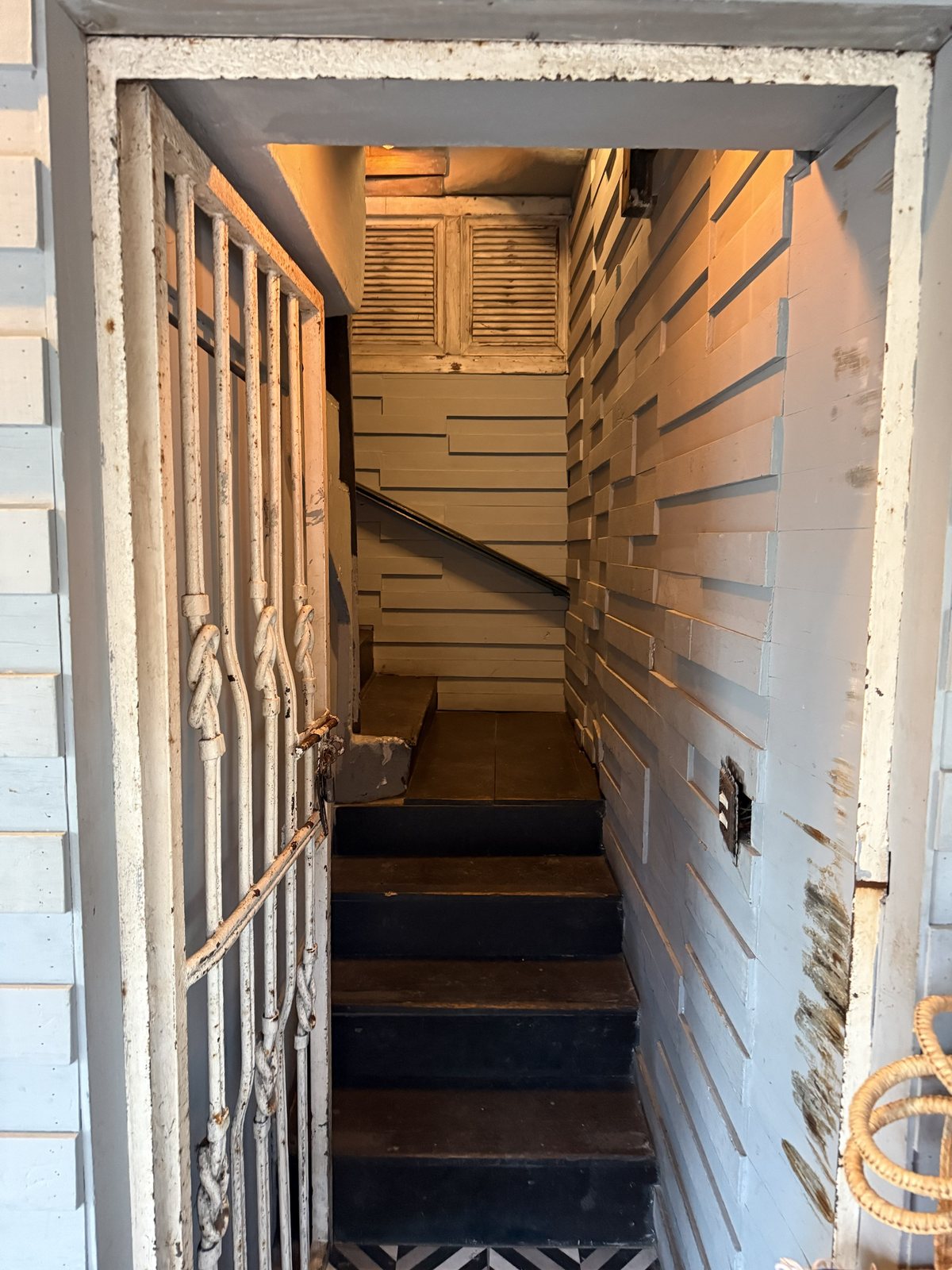
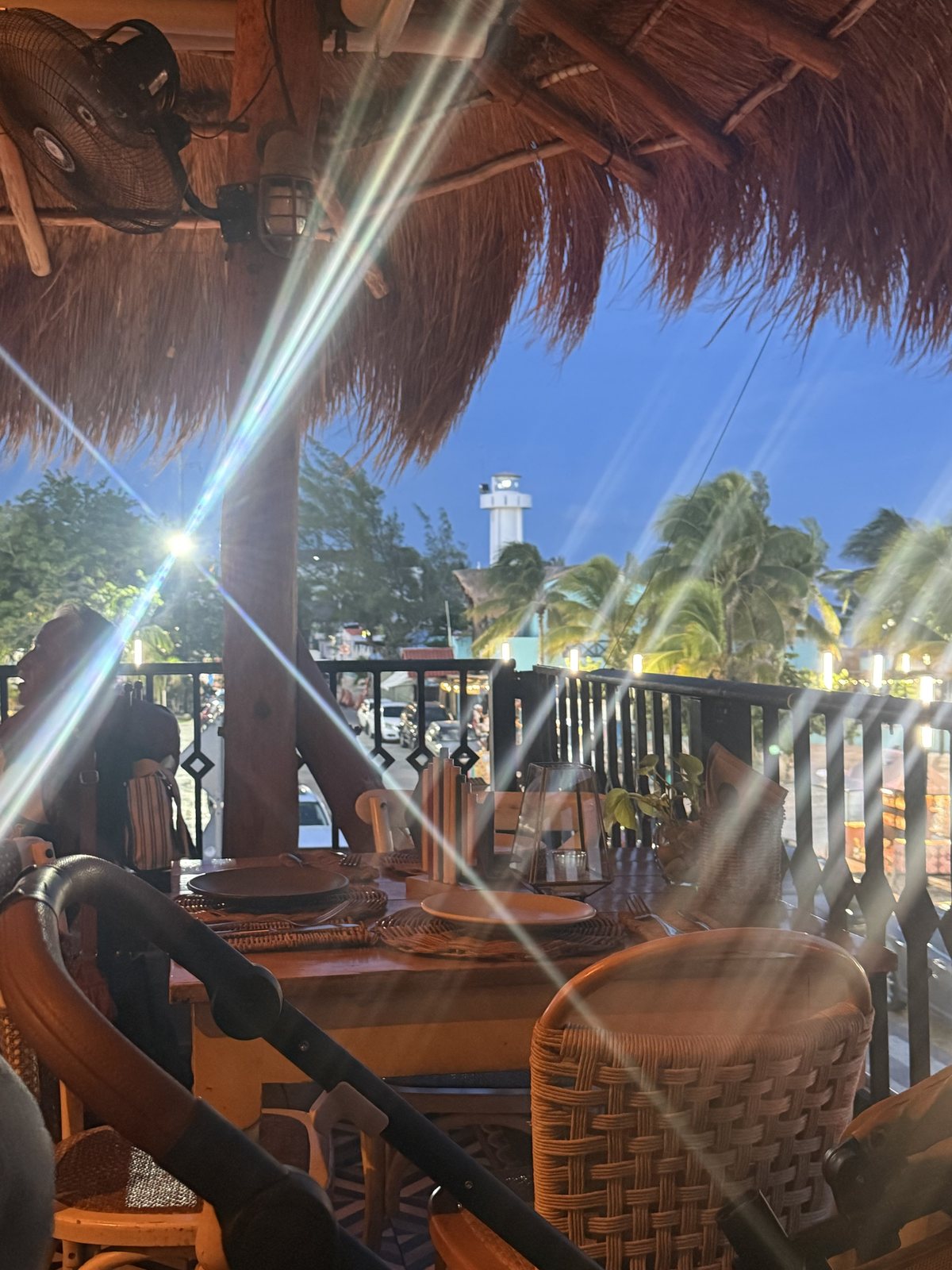
Upstairs the room opens out. It is dark, and beautifully put together.
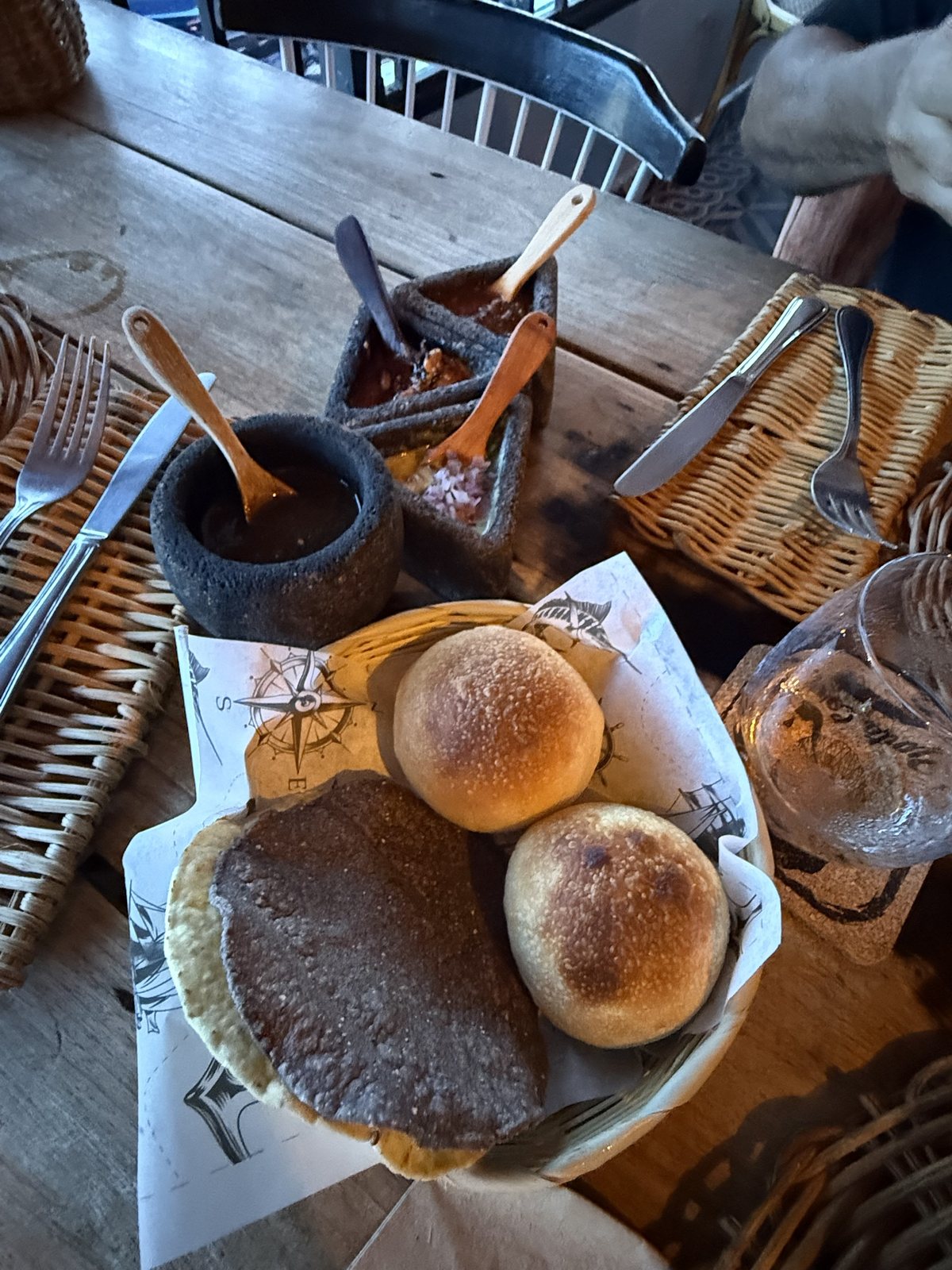
Woven placemats. Good silverware. The restaurant’s own mark turning up in places you would not expect, from the napkins to the paper origami one of the tasting courses arrives in.
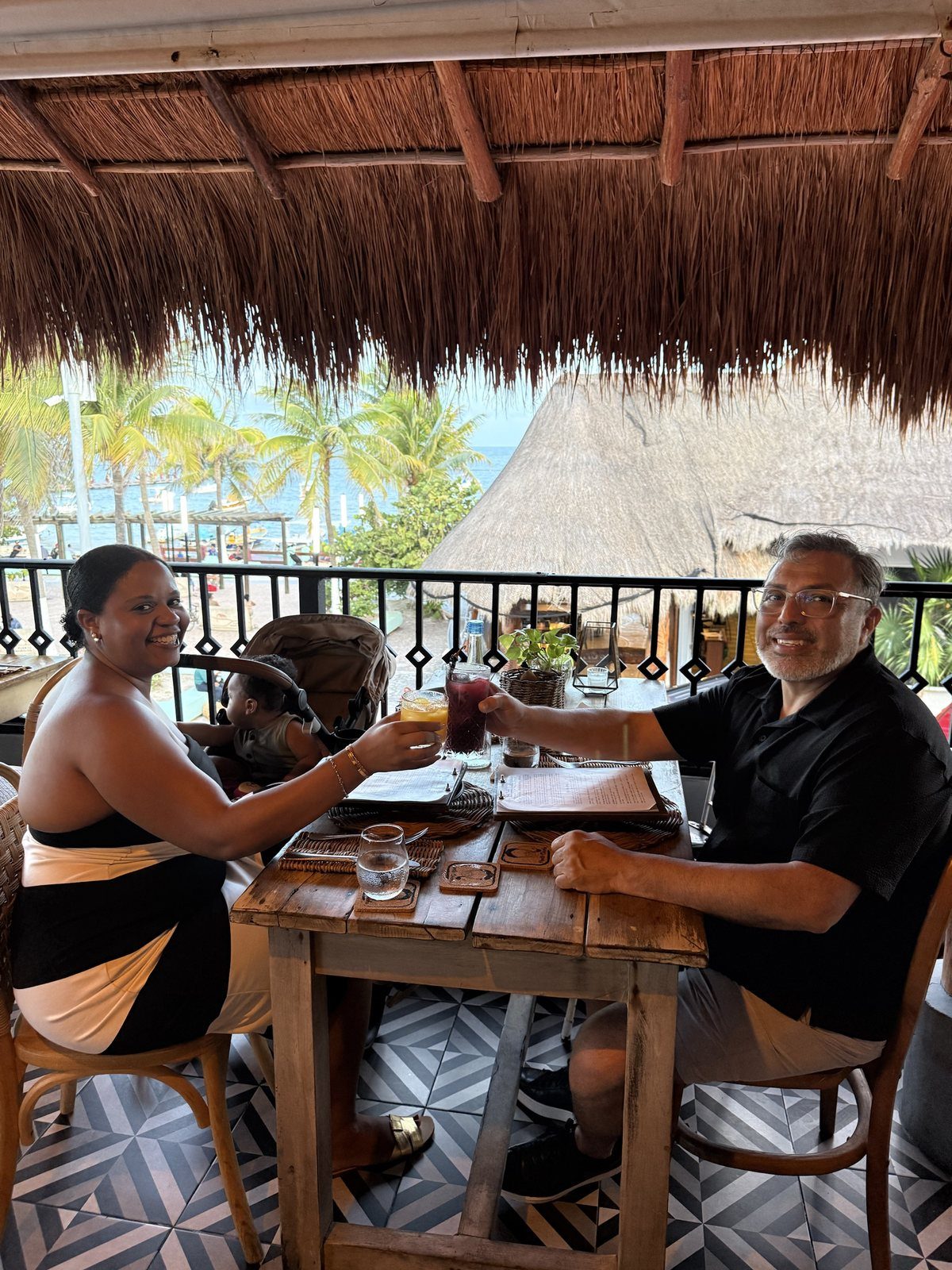
We ate at six, so we watched the sun go down from the table. Small glass lanterns came out as the light went.
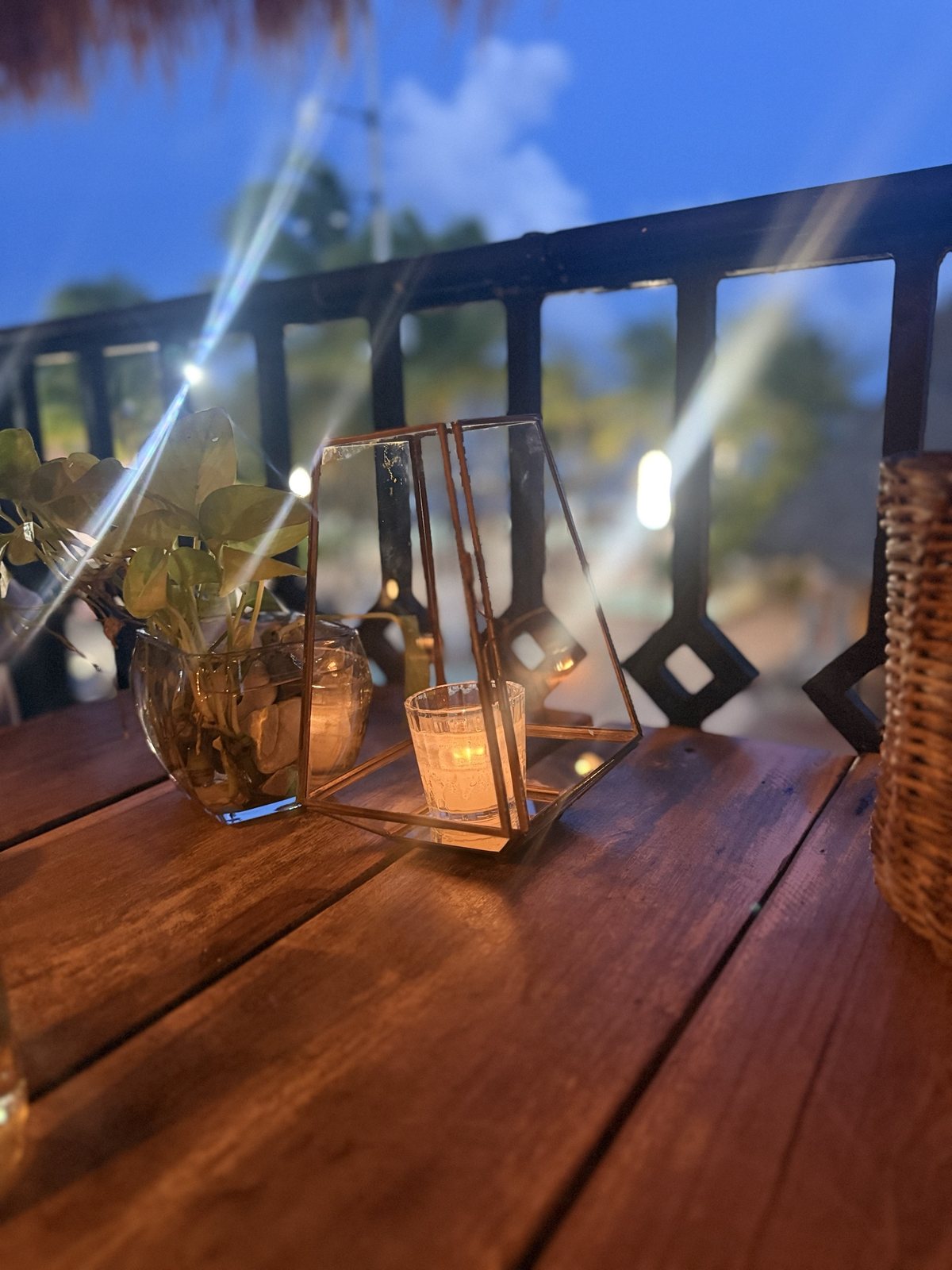
Rustic wood tables, menus on wood boards, a thoughtfully tiled floor, wrought iron around the edges of the room. Big woven pendants hanging from the palapa roof. Sea imagery painted on the walls, including a giant octopus. A beautiful oil container on the table.
It is also impeccably clean.
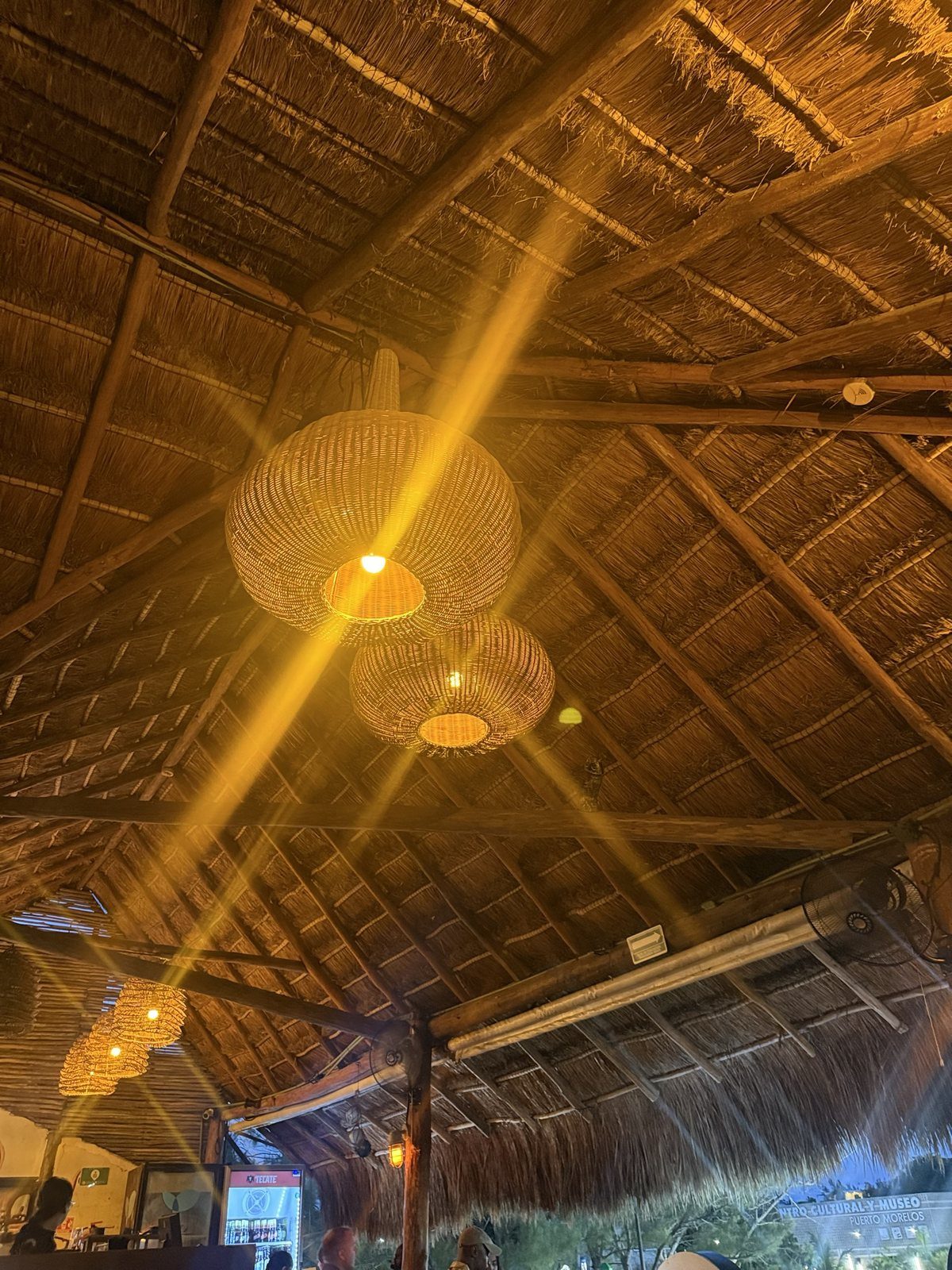
If you are not paying attention you will miss half of it. Every one of those details threads the same needle: a love of seafood, and a commitment to the fishermen who bring it in.
Seafood with a sense of place
Puerto Morelos is a fishing town. That is the whole point of eating here.
The menu carries the Michelin 2024 mark and three names: chef Daniel Ovadía, chef ejecutivo Carlos Lomeli, and maître sommelier Alejandro García. Lomeli is the one we met.
The restaurant sits a stone’s throw from the water, and its whole premise is that the seafood comes off the dock rather than out of a distribution chain.
According to the restaurant, its seafood comes from independent regional fishermen and local fishing cooperatives using methods such as deep-sea fishing, trolling and spearfishing, chosen to avoid the nets that damage coral reefs and catch protected species by accident.
Punta Corcho says it maintains traceability across that supply, including the fishermen, boats, fishing zones and permits involved. Through its relationship with the Sociedad Cooperativa de Producción Pesquera Pescadores de Puerto Morelos, it sources fish delivered fresh from the day’s catch.
The restaurant also says its sustainability work extends to lionfish, an invasive species that threatens marine biodiversity across the Caribbean, and that it participates in COMEPESCA’s Pesca Con Futuro initiative, which promotes responsible fishing and seafood consumption across Mexico and Latin America.
We cannot audit a supply chain from a dinner table, so we are reporting what the restaurant states rather than confirming it ourselves.
What we can say is that luxury dining on this coast often leans on imported ingredients and international influences. This is the opposite instinct, and for a destination defined by the Caribbean Sea, that matters.
It also changed how dinner felt. Eating somewhere that makes those commitments, and prints them at the top of its own menu, made us feel good about the meal, and that is a real part of what you are paying for here.
The cocktails deserve attention
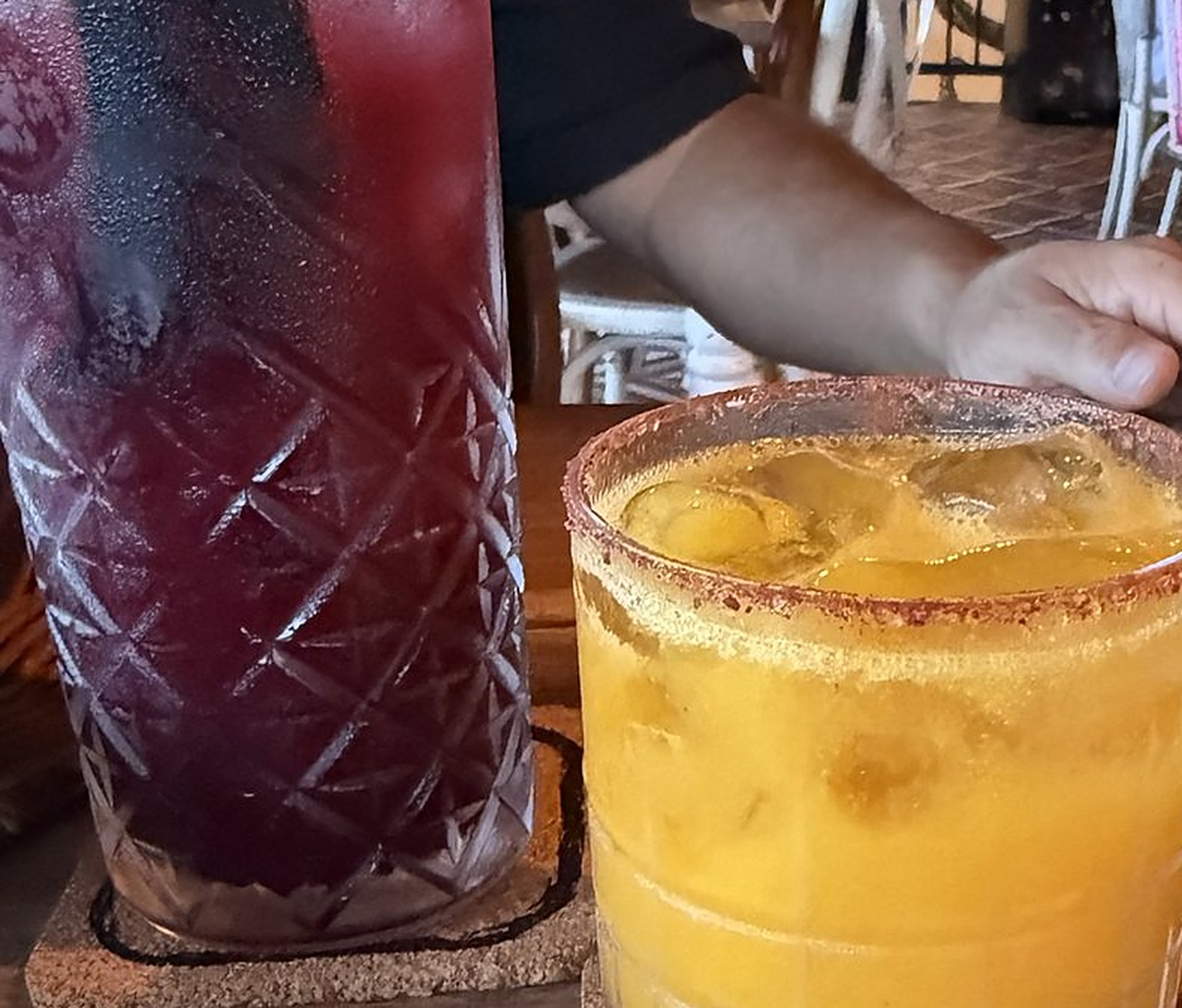
We both enjoyed ours, and they delivered noticeably different experiences.
Tepache Jam, $235 MXN
Mine. Made with 400 Conejos mezcal, passion fruit, pineapple and worm salt, bringing tropical fruit together with the smokier side of mezcal.
Rojito, $215 MXN
Josué’s. 400 Conejos mezcal, ancho chile liqueur, hibiscus, lime and roasted guajillo.
We loved both. His was noticeably stronger.
If you enjoy cocktails built on Mexican spirits and ingredients, the drinks list is worth your time.
Start with the soup you did not order
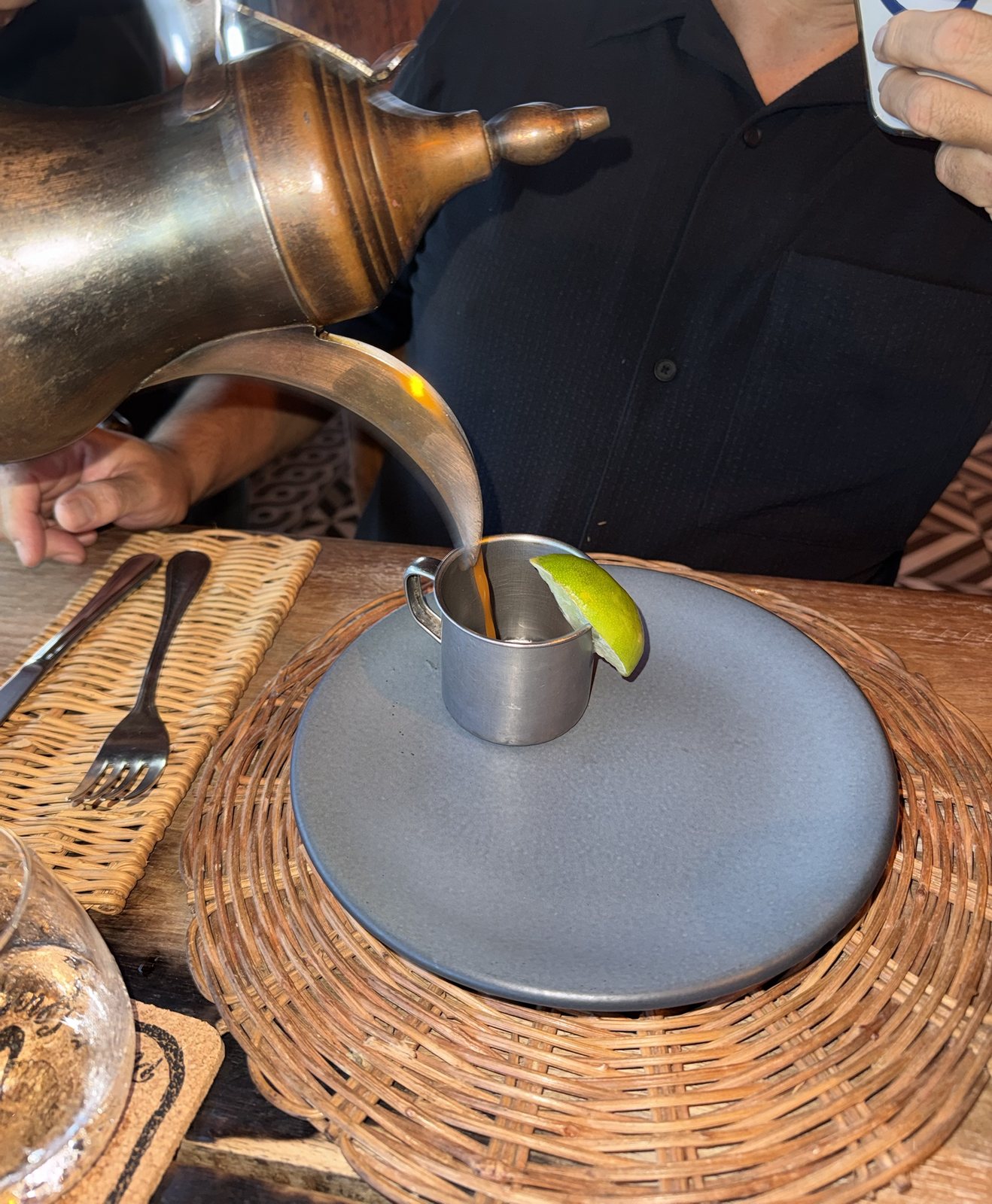
Before any of it, the bread arrived, and with it a small cup of shrimp soup.
It is not on the menu. It is an amuse-bouche, the bite a kitchen sends out to introduce itself, and it was delicious.
A kitchen that bothers to make the free thing taste like that is telling you something before you have ordered anything.
Two ways to experience Punta Corcho
Josué has spent more than 25 years in luxury hospitality, so he is interested in how a restaurant builds and delivers an experience from end to end. He chose the tasting menu.
I wanted specific dishes that had caught my attention before we arrived, so I ordered à la carte.
Honestly, I would have ordered more than I did. Our baby was cranky, and that decided it.
For couples who eat differently, having both options at one table makes a restaurant considerably more appealing.
The tasting menu: eight courses, $2,300 MXN
The menu is built around Mexican seafood, regional ingredients, wood-fired cooking and a range of techniques. It moves through tacos, seafood and shellfish into more substantial dishes before dessert.
The eight courses, as listed:
- 1. Octopus gordita. A corn gordita stuffed with octopus and string cheese, with green salsa prepared in a molcajete.
- 2. Caribbean tuna taco. A crispy taco with Caribbean tuna, guaya fruit pulp, chintextle sauce, lemon zest and xocoyol, an edible herb with a distinctly sour flavor.
- 3. Red aguachile with shrimp and oyster. Shrimp and chayote in a red aguachile with a crispy tempura oyster, guajillo and chipotle chiles, orange, jicama, cilantro and habanero mayonnaise.
- 4. Caribbean soft-shell crab taco. Soft-shell crab with dried chile mayonnaise and a Mexican-style sauce with mango.
- 5. Grilled shrimp with hollandaise. Served with crispy chaya leaves and lemon.
- 6. Wood-fired bone marrow with shrimp. Bone marrow cooked over wood fire with shrimp, garlic, guajillo chile, bean salad and flour tortillas.
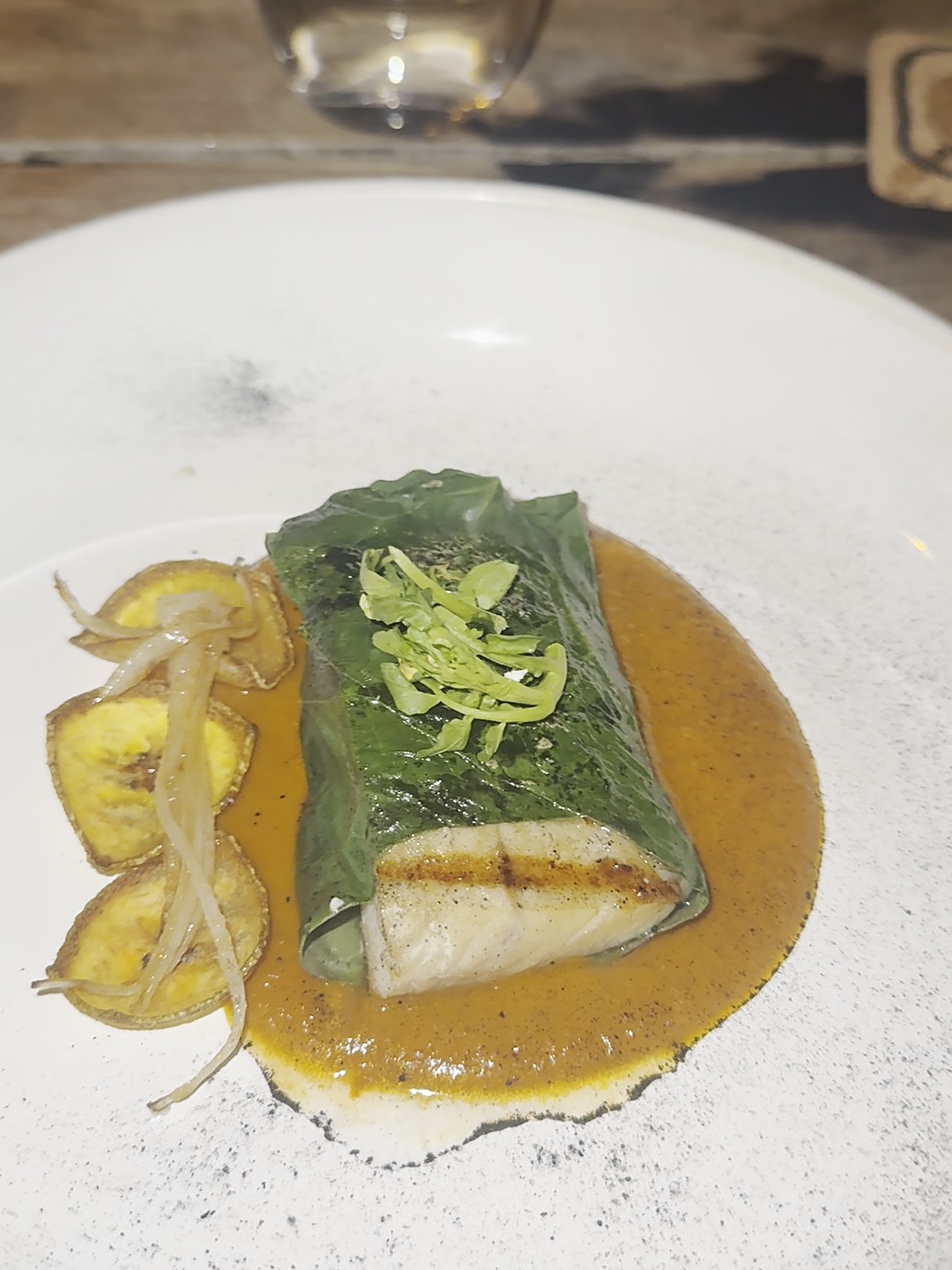
- 7. Fish in Mexican pepper leaf. Fish fillet wrapped and cooked in pepper leaf, with yellow mole, fried plantain and grilled onions.
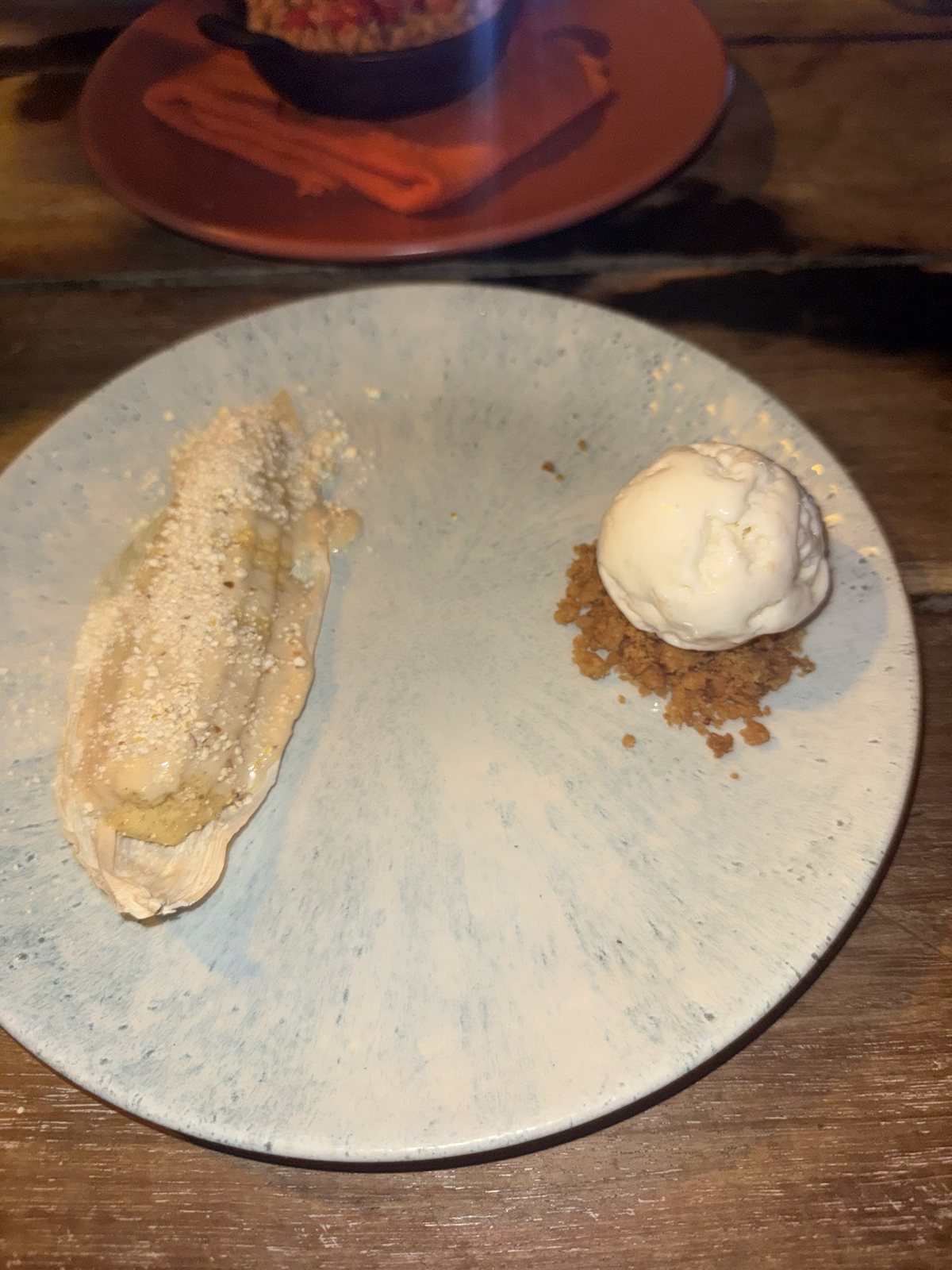
- 8. Sweet corn flan and sponge cake. With popcorn powder, mezcal cream and coconut ice cream.
The progression is ambitious, moving from lighter seafood into richer plates built on wood fire, mole and marrow. It also introduces ingredients many visitors will not have met before: chaya, chintextle, xocoyol, guaya.
Josué’s favorite course was the dessert
Of eight courses, the one he kept coming back to was the sweet corn flan.
It arrives in a corn husk, shaped like a tamal. Lightly sweet, and unmistakably Mexican. Corn is such an ordinary ingredient here that using it this way felt sentimental rather than clever. It told a story, and it washed the palate after everything that came before it.
His one note on the progression: he wished a sorbet had come between the savory courses to clear the palate.
Ordering à la carte
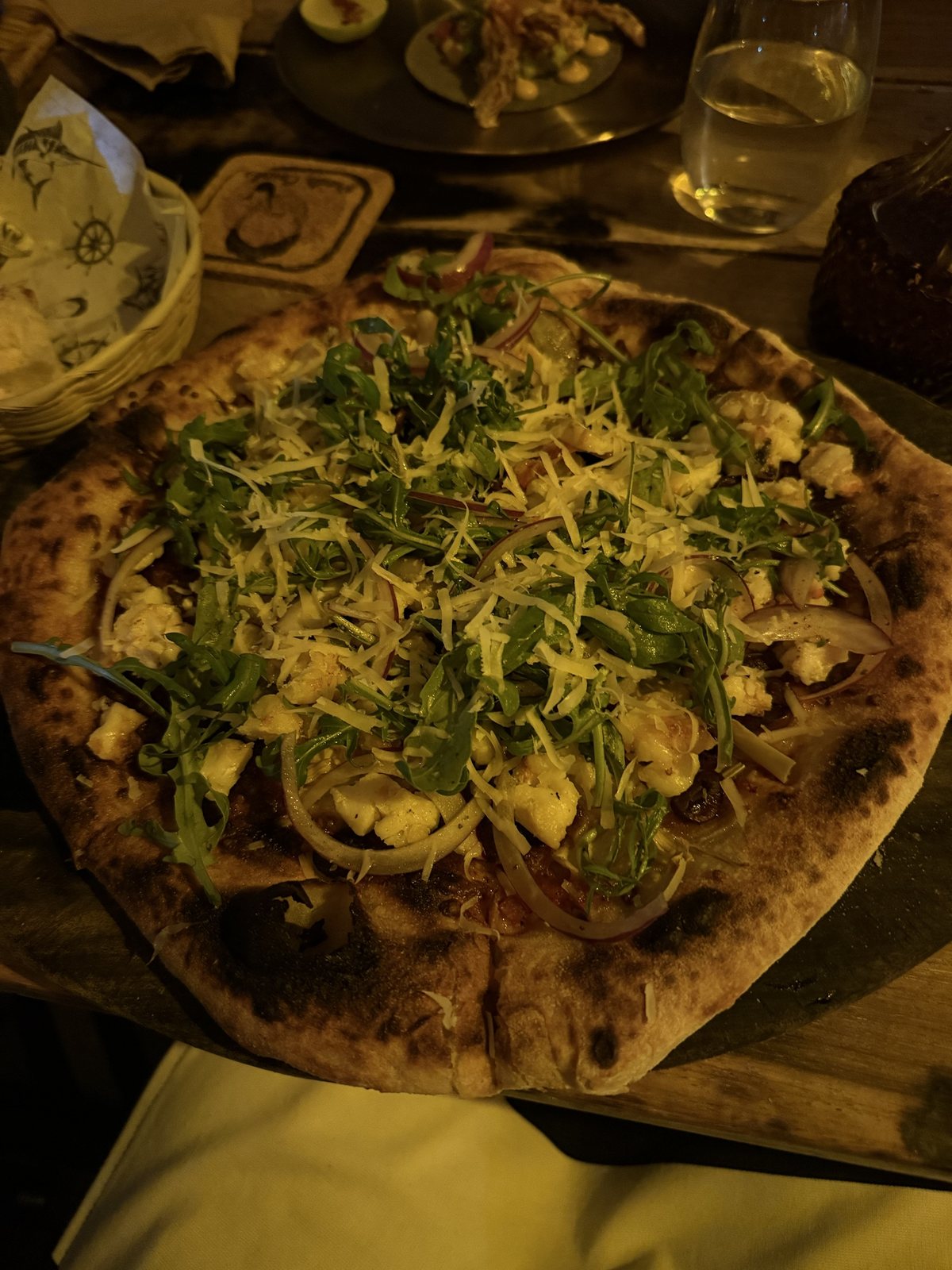
Wood-fired lobster pizza
This is the dish that caught my attention before we arrived.
Listed at $790 MXN, it brings together lobster, artichokes, black olives, arugula, red onion and oregano, cooked in a sapodilla wood-fired oven.
The crust is masa madre, a natural sourdough, and it comes out of the open wood fire dressed rather than loaded.
It was a true delight. Fresh, generous with the lobster, and the arugula lightened what could easily have been a heavy plate.
The crust was an accompaniment. The toppings were the star.
I would order it again and again. I spent a genuine minute wondering whether a second one would survive the drive home for our girls.
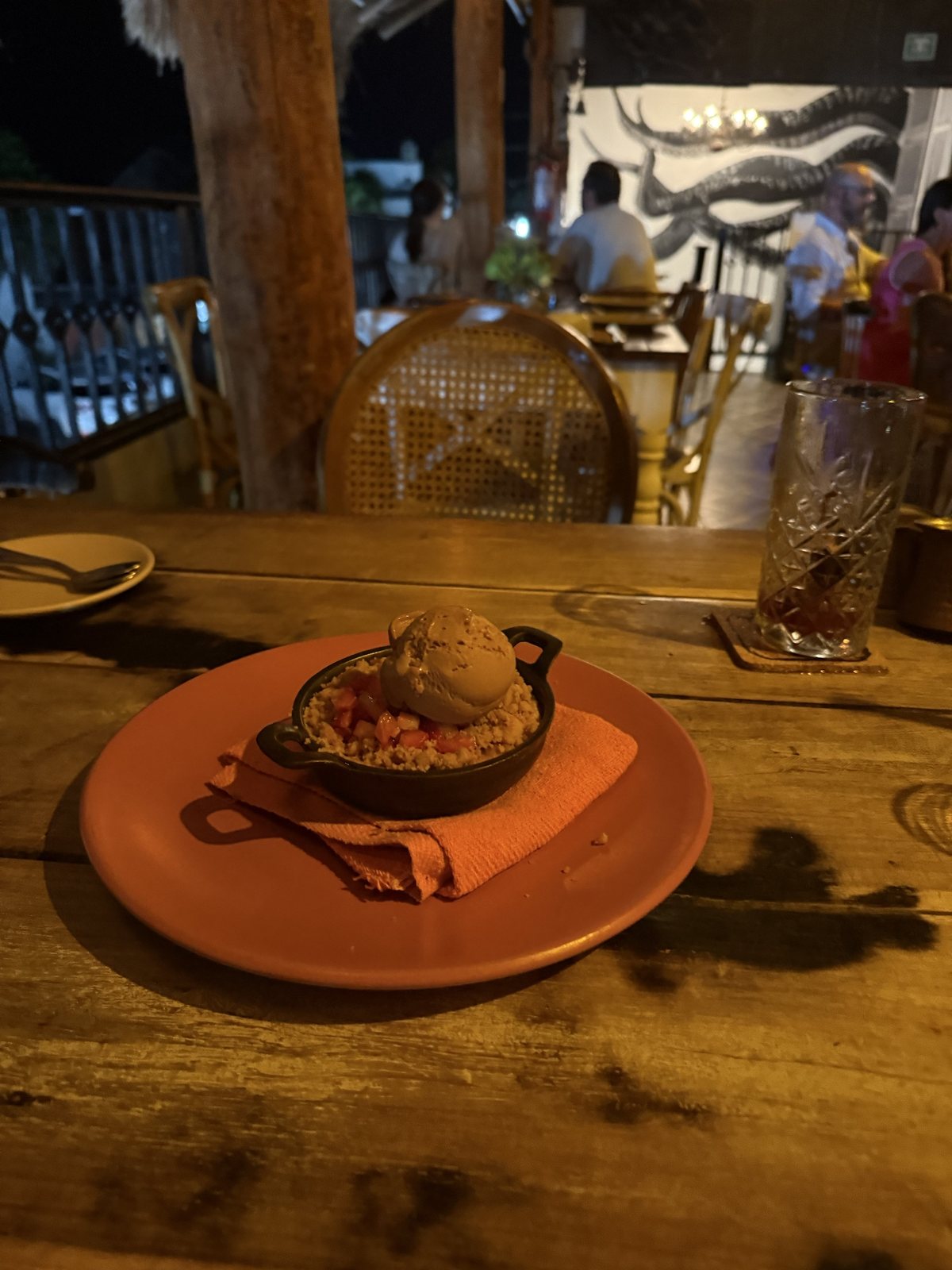
House strawberry crumble
At $240 MXN, served with salted caramel ice cream, and ordered separately from Josué’s tasting menu.
I do not even like strawberries. I ordered it because it is the house special, and I am glad I did.
It was a flavor explosion, and the textures were doing far more work than a crumble usually does.
Ask for Gerardo
Service was the part neither of us expected to be talking about days later.
Gerardo took care of us, and Josué’s verdict was that every server should be trained the way Gerardo has been. He captured the heart of service, and he was able to convey the chef’s intentions with every course.
For a tasting menu built on ingredients most diners have never encountered, that is not a nicety. It is the difference between eating eight courses and understanding them.
He also followed the secuencia de servicio, the sequence of service, all the way through. When you sit down, a server should ask about food allergies, offer water, offer drinks, and suggest at least one. It sounds basic. It does not happen everywhere, and Josué notices when it does not.
It was also clear they work as a team. Gerardo was assisted by Bart, who was just as good.
What dinner cost, and whether it is worth it
We paid roughly $304 USD in total, including a 20 percent tip. Menu prices at Punta Corcho include IVA, so what is printed is what you pay before you decide on the tip.
That covered Josué’s $2,300 MXN tasting menu, my lobster pizza at $790 MXN, the strawberry crumble at $240 MXN, and five cocktails between us. Three of those were mine.
Whether that is good value depends entirely on where your money comes from.
Josué’s read is that it is expensive for locals, and he is right. Earning and spending in pesos, this is a special-occasion number.
Mine is different. I am from Austin, and for the quality of this menu the price is approachable. The same dinner in a serious food city in the United States would run several hundred dollars without the view, the fishermen, or the octopus on the wall.
Both of those things are true at once, and we think saying so is more useful than picking one.
Is Punta Corcho worth the trip?
Yes, and we will be going back.
The food was fresh and delicious. The hospitality and service were phenomenal. The sourcing is not a marketing line bolted onto a menu, it is visible in the room.
We would return for a casual dinner, and we would bring our eight-year-old and our fourteen-year-old for a family meal.
Value is the only part that needs a caveat, and it is a caveat about your wallet rather than about the restaurant.
The Riviera Maya Edit’s take
- Location: Puerto Morelos, Quintana Roo, Mexico
- Recognition: Michelin Bib Gourmand three years running, 2024 through 2026, which is not a Michelin star
- Cuisine: Seafood-focused, contemporary Mexican, wood-fired
- Tasting menu: Eight courses, $2,300 MXN per person at the time of our visit
- À la carte: Available, and a good option if you want one or two dishes
- What we paid: About $304 USD for two, including a 20 percent tip
- Best for: Couples, date nights, seafood lovers, and anyone wanting to eat beyond their resort
- What stood out: The shrimp soup amuse-bouche, the lobster pizza, the sweet corn flan, and Gerardo
- Bring a baby? Yes, but the stroller goes up the stairs by hand
- Would we return? Yes, and with our older girls next time
If you are going
- Address: Av. Rafael E. Melgar 4 (SM01, MZ6, Lt. 01-01), facing the malecón and Parque Central, Puerto Morelos
- Phone: 998 404 7553
- Hours: 1:00 p.m. to 11:00 p.m. daily
- Reservations: We booked through OpenTable
- Online: @puntacorcho on Instagram, which the restaurant uses in place of a website
- Getting there: About 45 minutes from Cancún in traffic, about 35 from Playa del Carmen
- Parking: We took an Uber. Parking in Puerto Morelos can be a harrowing experience and we did not want to deal with it on a date night
- Access: Second floor, up a narrow staircase above a souvenir shop. No lift